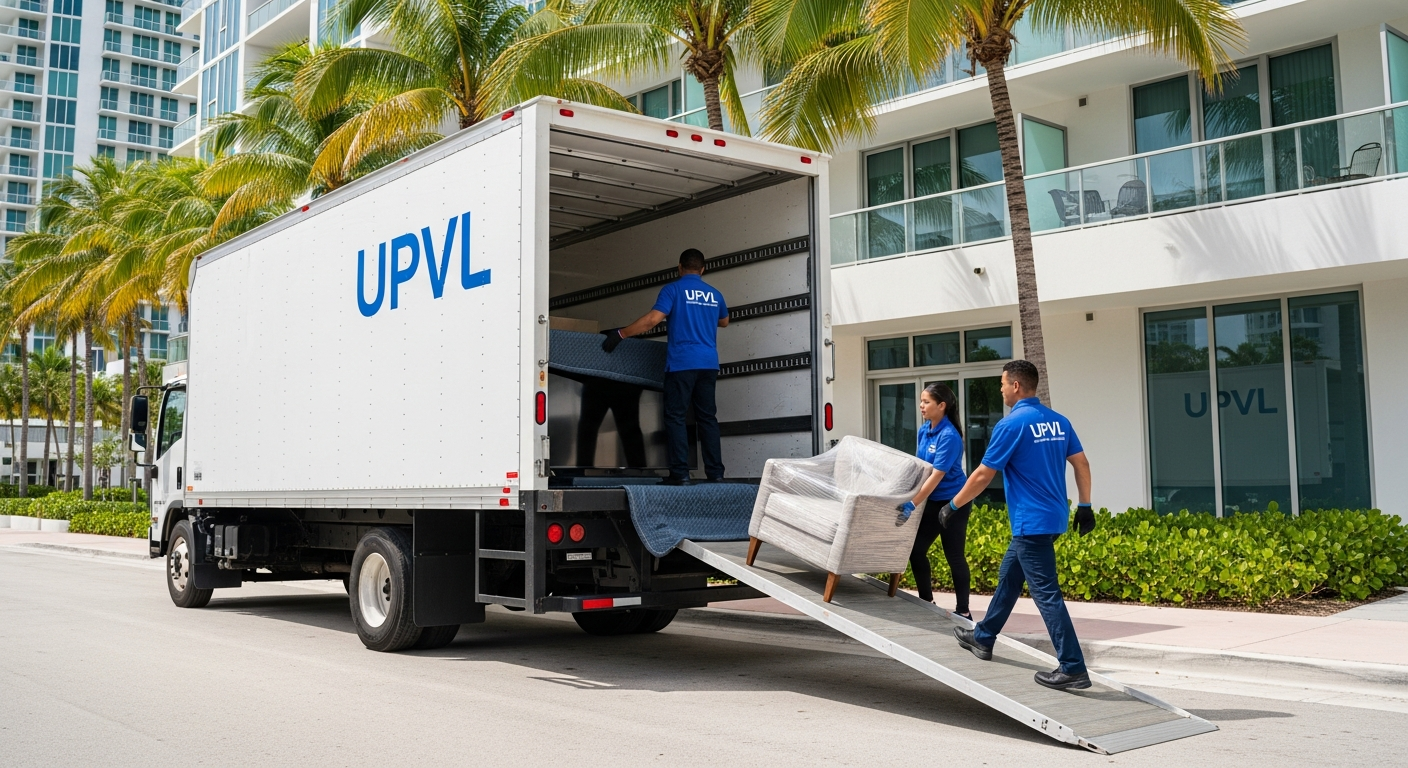
Choosing between hourly and flat rate movers in Los Angeles can feel confusing, especially with LA traffic, parking rules, and building restrictions in the mix. The right pricing model depends on your move size, distance, and how predictable your situation is. Understanding how local movers actually bill in LA helps you avoid surprise charges and pick the option that truly fits your budget.
Quick Navigation
Most licensed moving companies in Los Angeles will quote either hourly pricing, a flat rate, or a mix of both. The right choice depends less on what sounds cheaper and more on how predictable your move is and how many LA-specific variables you’re dealing with.
With hourly rate movers in LA, you pay for the actual time movers spend working on your move, usually with a minimum number of hours.
Hourly pricing is usually best when your move details are straightforward, distances are short, and there’s minimal risk of unexpected delays.
Flat rate movers in Los Angeles charge a single, pre-agreed price based on your inventory, access conditions, and distance. It’s common for longer local moves or when there are many unknowns.
Flat rates are attractive when you want predictable costs and don’t want to pay more if LA traffic or building delays slow things down.
For complex or long-distance routes originating in LA, companies like United Prime Van Lines long-distance moving service often prefer a more detailed, flat-style quote built from your inventory and origin/destination conditions.
Los Angeles is not a typical city when it comes to moving. Traffic patterns, parking enforcement, building regulations, and hills can all affect how long a move takes and whether hourly or flat pricing makes more sense.
LA is famous for congestion. The region consistently ranks among the most congested metro areas in the U.S., with drivers losing dozens of hours annually to delays according to transportation studies and U.S. Census Bureau commuting data for Los Angeles County.
For moving, this matters because:
Street parking in LA can be tricky. Many neighborhoods have permit-only parking, narrow streets, or strict time limits. Parking enforcement is active in many parts of the city, and violations can lead to tickets or forced truck relocations, which eat up paid time.
Key parking issues that affect your cost:
Always ask your building manager and check local parking rules on your block before move day. For complex urban access, an experienced Los Angeles mover such as United Prime Van Lines in Los Angeles can advise you on best practices and potential fees.
In LA’s dense neighborhoods—Downtown, Koreatown, Hollywood, Westlake, parts of the Valley—many apartment buildings have strict move policies and challenging access.
All of these can influence whether an hourly or flat rate makes more sense. For example, if your building only allows moves within a 4-hour elevator window, a flat rate can be safer, so you’re not penalized if elevator access is delayed by another resident.
Hourly rate movers in LA are common for local moves, especially within the same neighborhood or nearby areas where drive time is short and predictable.
Every company sets its own rates, but the structure often looks similar:
Under California regulations, licensed movers follow specific rules on how they charge, document, and present rates to consumers. The California Bureau of Household Goods and Services (BHGS) oversees licensed household movers and provides consumer guidance on estimates, billing, and protections; see their information pages linked via California BHGS consumer mover resources.
Hourly pricing tends to work in your favor when:
For example, a well-packed one-bedroom move from Silver Lake to Echo Park, with parking reserved and no elevators, may be cheaper using an efficient hourly crew than a cautious flat rate.
Hourly can become expensive if conditions are unpredictable or challenging:
Under these conditions, hourly pricing puts almost all the risk on you. If a truck gets stuck on the 405 due to an accident, the clock keeps ticking.
One of the most common questions about hourly rate movers LA residents ask is how minimum hours work. Here’s what to look for:
Always ask the dispatcher or moving consultant how your time will be counted from start to finish, so there are no surprises on move day.
Flat rate movers offer a single, bundled price for your move, which can be easier to budget around in a city as unpredictable as LA.
A true flat rate is usually built from several detailed factors:
This information may be gathered via phone, video survey, or in-person estimate. For complex or high-value moves, movers like United Prime Van Lines house moving services often prefer a thorough inventory to give a reliable flat quote.
Flat rates can cause friction when the original assumptions aren’t accurate:
In those cases, a flat rate company may:
To keep your flat rate truly flat, provide accurate details during the estimate and update your mover if anything changes before move day.

When people ask about the average cost of movers LA residents typically pay, the honest answer is “it depends.” The same two-bedroom move can vary widely based on day of week, access conditions, and whether you choose hourly or flat pricing.
These are broad, hypothetical ranges for local moves within the LA metro area. Actual costs will vary by company, season, and specifics of your move.
On straightforward small moves, hourly can be cheaper. On larger or more complex moves, a well-structured flat rate often provides better value and fewer surprises.
Scenario: One-bedroom move from a ground-floor apartment in Chatsworth to another ground-floor unit in Northridge. Good parking at both locations, move scheduled midday on a weekday.
Which is better? Hourly likely wins here if you’re well packed and organized. The risk of major delay is low, and LA traffic on this route is manageable during midday hours.
Scenario: Two-bedroom move from a Hollywood high-rise to a Downtown LA loft. Both buildings require elevator reservations. Parking is in structured garages with loading docks. Move must be completed within specific HOA time windows.
Which is better? Flat rate is usually safer. There are too many variables that can slow an hourly job, and you don’t want to pay extra because another resident blocks the elevator.
Scenario: One-bedroom move from Santa Monica to Silver Lake on a Friday afternoon. Both buildings are moderate access, but the route must cross heavily trafficked freeways or surface streets.
Which is better? Flat rate often offers more peace of mind. If there’s a major traffic incident, an hourly job could run much longer than expected.
People often ask, “are movers worth it in LA?” given the city’s costs and traffic. For most medium-to-large moves, the answer is usually yes, especially when you consider:
For small, nearby moves with minimal furniture, DIY can make sense. But once you factor in truck rental, equipment, fuel, parking challenges, and your own time, hiring a reputable mover is often a solid value in Los Angeles.
The question “is it cheaper to move on weekday LA?” comes up all the time—and for good reason. Both demand and traffic patterns shift between weekdays and weekends.
Many movers charge premium rates or have higher minimums for peak days, which commonly include Saturdays, end-of-month dates, and busy summer weekends.
It’s not guaranteed that weekdays are cheaper, but they often come with more flexible scheduling, and some companies offer weekday discounts compared to Saturdays.
Traffic in LA can actually be tricky on both weekdays and weekends:
For hourly moves, scheduling a weekday move that avoids rush hours can save significant time and money. For flat rate moves, weekday vs weekend matters more for availability than for the risk of extra time cost.
If you can be flexible:
Being flexible can sometimes matter more than the weekday/weekend label in a city with traffic patterns as complex as Los Angeles.
Both hourly and flat rate moves can come with extra charges if the initial quote doesn’t cover all the realities of your move. In Los Angeles, those realities often revolve around access, traffic, and building rules.
To keep your bill predictable, ask:
The more accurate your information, the fewer surprises. Provide:
Reputable movers in LA, such as United Prime Van Lines apartment moving service, rely on accurate details to quote fairly and avoid last-minute changes that frustrate both sides.

Good planning is the single best way to keep costs under control, no matter which pricing model you choose.
If you’re short on time or dealing with a larger home, full-service options—packing, unpacking, and storage—can be worth it in LA. A company that offers integrated services, like United Prime Van Lines full packing services, can streamline the process, particularly if building rules limit your move window or if you need short-term storage while you transition between homes.
Choose hourly if your move is small, nearby, and straightforward—think studio or one-bedroom with easy parking and minimal stairs. Choose flat rate if you have a larger home, tricky access (stairs, elevators, long carries), or you’re moving across town during times when traffic is unpredictable. Flat rates usually provide better budget control for complex LA moves.
Most hourly rate movers in LA charge for all time the crew is working on your move, including time stuck in traffic between locations. If there’s an accident on the freeway or heavy congestion, the clock typically keeps running. Some companies may estimate a certain amount of drive time up front, but you should assume that actual time on the road will be billed unless your contract states otherwise.
There usually isn’t a separate “traffic fee,” but traffic affects how long your move takes. On hourly jobs, that can feel like a traffic charge because delays directly increase your bill. On flat rate moves, movers may build expected traffic into your price, especially if they know your route crosses notorious choke points at peak times. Always ask your mover how they handle major, unexpected traffic disruptions.
Most local movers in Los Angeles have a minimum of 3–4 hours of labor time for weekday moves, and sometimes higher minimums on Saturdays or peak dates. The minimum usually includes loading, driving, and unloading. If your move is very small and close by, the job may take less than the minimum, but you’ll still pay for the full minimum block of time.
Yes, flat rate movers can charge additional fees if the job is significantly different from what was agreed. Common reasons include more items than listed on the inventory, undisclosed stairs or difficult access, extra stops, or last-minute requests for packing service. To minimize changes, give an accurate inventory, share photos or video of access, and update your mover if anything changes before move day.
Often, but not always. Many movers have higher demand and sometimes higher rates or minimums on Saturdays and end-of-month dates. Weekdays—especially Monday through Thursday—can offer slightly better pricing and more flexibility in scheduling. Also, if you schedule your weekday move outside of rush hours, you may save time and money on hourly jobs by avoiding the worst traffic.
For small, simple moves with minimal furniture and short distances, renting a truck and doing it yourself can work. But in Los Angeles, parking challenges, traffic, stairs, and elevator rules often make professional movers worth the cost, especially for one-bedroom and larger homes. They bring experience, equipment, and efficiency, and they understand local building and access issues that can surprise DIY movers.
Share everything that might affect access or timing: number of stairs, elevator access and whether it needs to be reserved, parking limitations, loading docks or garages, HOA rules, and any time restrictions. Also mention narrow hallways, tight turns, long walks from the unit to the truck, and any streets that are hard for large vehicles to navigate. Clear information upfront helps movers quote accurately and avoid last-minute issues.
For California moves, the contact information is:
Both hourly and flat rate movers can work well in Los Angeles if you match the pricing model to the realities of your move. For small, close, and simple moves, a well-managed hourly crew can be cost-effective. For larger homes, cross-town routes, or buildings with strict rules, a carefully built flat rate often delivers better value and peace of mind.
Whichever option you choose, accurate information, good scheduling, and an experienced LA mover are the keys to controlling costs and avoiding surprises on move day.